Phase 0 — Discovery
Autonomous zero-day discovery in real repositories: attack-surface mapping, taint analysis, built-in checks and LLM-driven hypothesis testing.

Vulnerability Attack and Injection Tool for Python
Ask about Python vulnerabilities, CVEs, exploit patterns, and secure coding.
VAITP runs on limited GPU resources. Response time depends on model size and current load.
Currently limited to one message at a time due to resource constraints. Multi-turn conversations coming soon.
Premium users get more daily requests and access to larger models. Support us on Patreon.
Open-source, cross-platform software for Python vulnerability injection and attack using AI, with a comprehensive, community reviewed, dataset with vulnerabilities and corresponding patches.

VAITP is a cross-platform software that uses AI models to inject and attack realistic vulnerabilities in Python scripts.
Catalogued vulnerabilities
Vulnerability types injected
Peak exploitation success rate
Fine-tuned models released
VAITP is now a four-phase framework. It finds candidate weaknesses, plans an injection, generates the vulnerable code, and then proves the result is genuinely exploitable by attacking it inside a container. We are continuing to develop, test and deploy it, and to train and evaluate local models against it — including model families we have not tried yet — before integrating it into the VAITP GUI.
Autonomous zero-day discovery in real repositories: attack-surface mapping, taint analysis, built-in checks and LLM-driven hypothesis testing.
A reasoning model reads the target code alongside similar cases retrieved from the VAITP dataset, and writes a structured injection plan for a coder model to carry out.
The vulnerable variant is generated and measured — Bandit, Semgrep and DeVAIC for static analysis, BLEU-4, CodeBLEU and ROUGE-L for similarity to the original.
The attack is executed in an isolated Docker container. A vulnerability counts only once it has been exploited and proven, with a self-correcting feedback loop when it has not.

Our first classifiers represented code as a bag of words, counting token occurrences while disregarding semantics, grammar and order. Cheap to train, and a useful baseline for everything that came after.
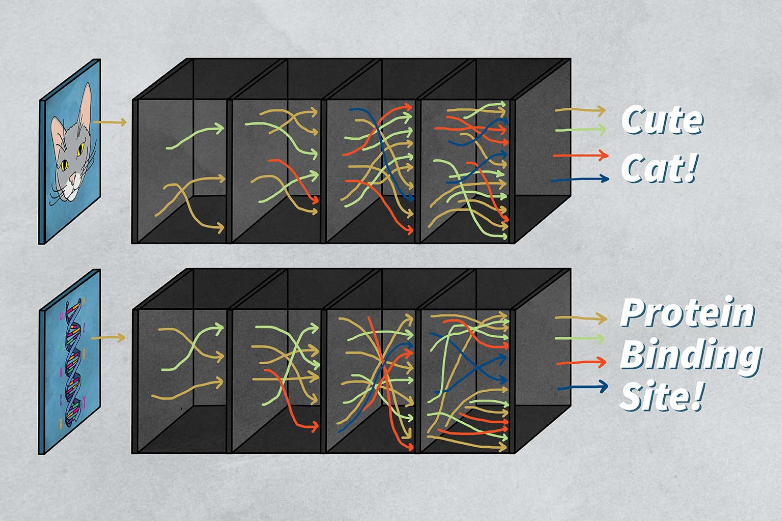
One-dimensional convolutional networks came next, learning local patterns over token sequences without us having to hand-design the features.
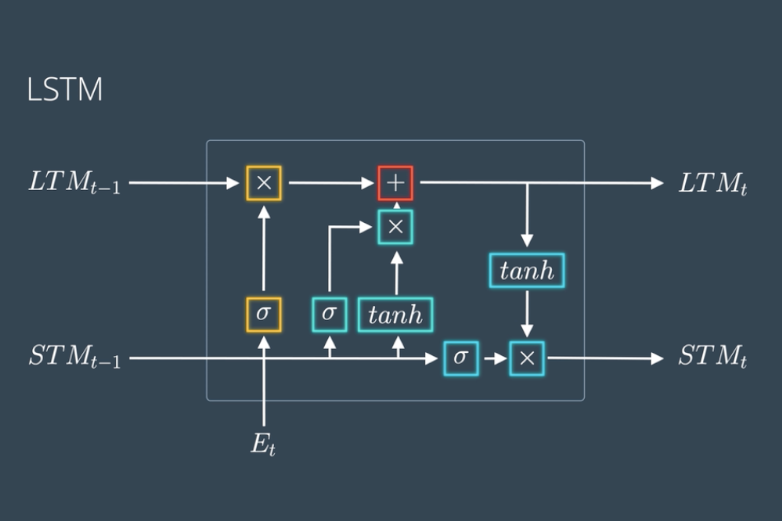
Long Short-Term Memory networks carried context across a sequence, which mattered for defects whose cause and effect sit far apart in a file.

VAITP is the doctoral research of Frédéric Bogaerts, a PhD student and researcher at the University of Coimbra since September 2022 and an assistant professor at ESTGOH, supervised by Naghmeh Ivaki (University of Coimbra) and José Fonseca (Instituto Politécnico da Guarda). The work is carried out at CISUC, in the Department of Informatics Engineering.
Full profile and preprints on ResearchGate · LinkedIn.


Join the VAITP community!
Contribute to our dataset and receive VAITP Token rewards!
Based on the Ethereum Blockchain, VAITP Token provides secure and decentralized transactions!
The VAITP WordPress Rewards Plugin allows administrators to reward users based on their actions directly on the VAITP Blockchain!